

- HOME >> SOLUTIONS >> By Standard >> Other Standards
Tensile Testing to NADCAP Alignment Standards
Nadcap (National Aerospace and Defense Contractors Accreditation Program) is a global cooperative accreditation program for aerospace engineering, defense, and related industries.
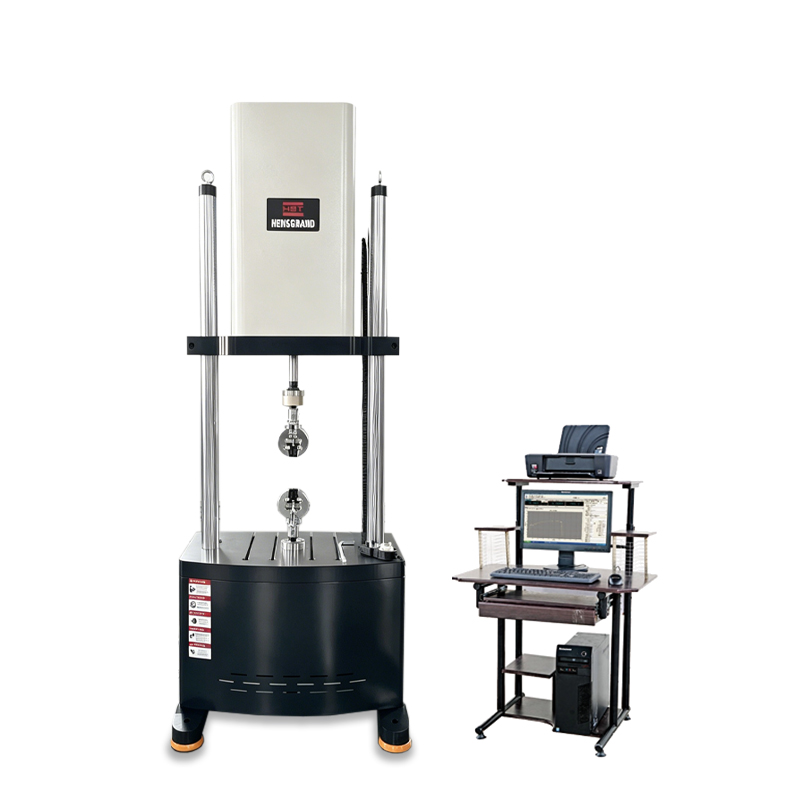
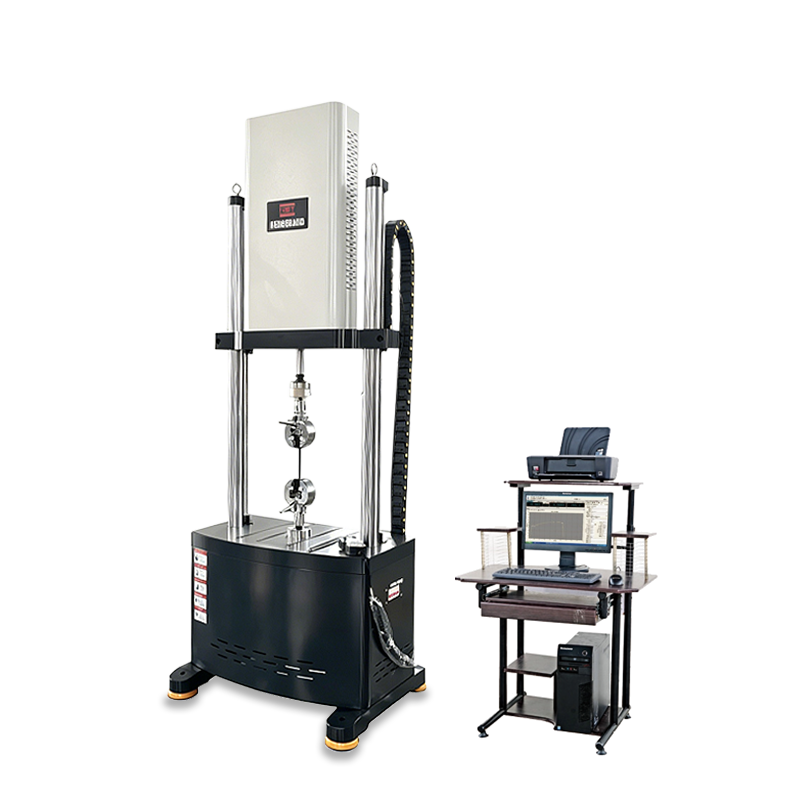
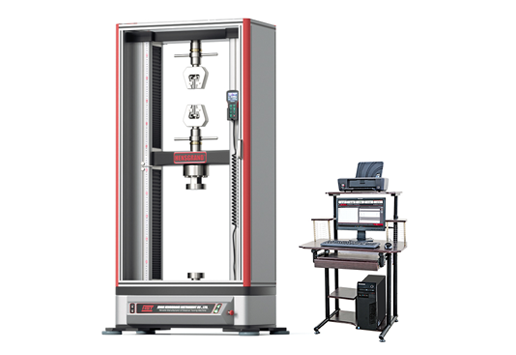
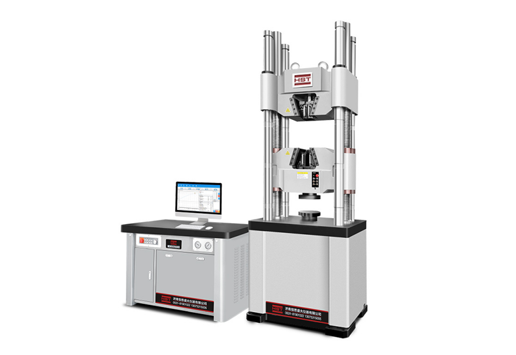
Tensile testing machine optimized for nadcap compliance
NADCAP is not a testing standard but an audit checklist which must be passed in order for an aerospace supplier to be NADCAP compliant. There are two main audit checklists that apply to mechanical testing: AC7101 for metallic materials, and AC7122 for non-metallic materials. Each of these checklists are dozens of pages long, but the main item of concern for mechanical testing laboratories is alignment and allowable bending.
For metals, the maximum allowable bending for static tests is 10% (non-brittle materials, <5% elongation to failure) and 8% (brittle materials, >5% ETF). The maximum allowable bending for all dynamic tests is 5%. For composites, the maximum allowable bending is 8%.
Percent bending strain is calculated in accordance with ASTM E1012, and is defined as "the greatest difference in axial strain under load between the average strain (of 3 or 4 strain gauges in any circumferential set) and any individual gage in that set, divided by the average strain, multiplied by 100. Furthermore, in order to ensure that the bending is measured in a way that is meaningful to the actual tests, the strain gaged specimens must represent those that will be tested, and use the actual load train that will be used for tensile testing. It is not appropriate to remove the grips that will be used for actual testing. For all these reasons, achieving the desired bending requirements can be challenging. Only the most rigid and quality-made mechanical testing systems and grips can meet the bending requirements of NADCAP.
Tensile testing machine optimized for nadcap compliance
NADCAP is not a testing standard but an audit checklist which must be passed in order for an aerospace supplier to be NADCAP compliant. There are two main audit checklists that apply to mechanical testing: AC7101 for metallic materials, and AC7122 for non-metallic materials. Each of these checklists are dozens of pages long, but the main item of concern for mechanical testing laboratories is alignment and allowable bending.
For metals, the maximum allowable bending for static tests is 10% (non-brittle materials, <5% elongation to failure) and 8% (brittle materials, >5% ETF). The maximum allowable bending for all dynamic tests is 5%. For composites, the maximum allowable bending is 8%.
Percent bending strain is calculated in accordance with ASTM E1012, and is defined as "the greatest difference in axial strain under load between the average strain (of 3 or 4 strain gauges in any circumferential set) and any individual gage in that set, divided by the average strain, multiplied by 100. Furthermore, in order to ensure that the bending is measured in a way that is meaningful to the actual tests, the strain gaged specimens must represent those that will be tested, and use the actual load train that will be used for tensile testing. It is not appropriate to remove the grips that will be used for actual testing. For all these reasons, achieving the desired bending requirements can be challenging. Only the most rigid and quality-made mechanical testing systems and grips can meet the bending requirements of NADCAP.
Relate Products