



Abstract
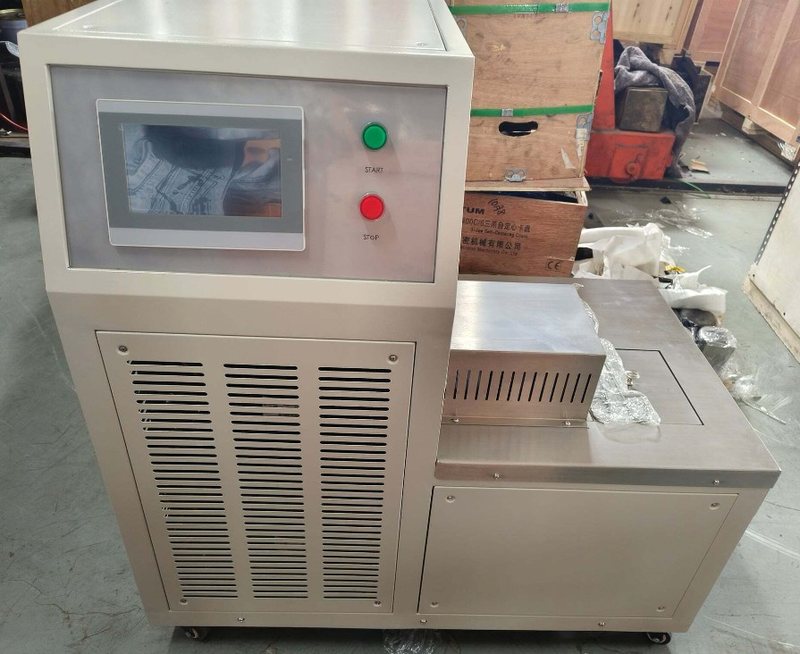
The HST DWC-80T is a Touch Screen display Impact Test Low Temperature Chamber built for Charpy notch impact testing of metal materials: it cools a batch of up to 72 standard impact specimens to a set point anywhere in the +30 to -80deg C range, holds it with ±0.2deg C control accuracy, and keeps the specimen at temperature for the immersion time the protocol calls for. Compressor refrigeration (an imported Europe Embraco compressor), a cycle-stirring heat-balance design and a touch-panel controller with automatic time and alarm functions are the three things the machine is built around. This 2026 buyer's note covers what a low-temperature impact chamber decides for a Charpy line, how a cooling run is set up and read, and where the DWC-80T fits next to HST's Impact Testing Machine Series.
Key Takeaways
- Temperature range +30 to -80deg C, control accuracy 0.2deg C, uniformity 1deg C - enough depth for EN 10045 and GB/T 229-2009 low-temperature schedules
- 72-specimen capacity (standard 10 x 10 x 55mm impact bars) - a full batch cools in one tank, not one at a time
- Compressor refrigeration with an imported Europe Embraco compressor; no liquid nitrogen, no dry-ice bath
- Cooling medium: about 5L of methanol or anhydrous ethanol (75% alcohol disinfectant prohibited); independent digital display timer, 1s to 59min 59s, resolution 1s
- Touch panel with PV/MV/SV readout, temperature-curve and time-interval query, data report, alarm definition, language choice (Chinese, English, Russian)
- CE (2006/42/EC Machinery Directive) and ISO 9001 (GB/T 19001-2016/ISO 9001:2015) documented; 3.2kW at 220V
What the DWC-80T is for
The machine is designed according to the Charpy notch impact test method for metal material. In a steel mill lab, a heat-treatment shop or a materials research group, the impact value of a steel changes with temperature - that is exactly the property EN 10045, ASTM E23, ISO 880 and GB/T 229-2009 all measure, and the reason a test programme normally runs the same notch specimen at several temperatures. The chamber's job is the half of that programme the impact machine does not do: bring the specimen to the test temperature, hold it there, and let the operator know the moment it has been immersed long enough.
Two design choices define the DWC-80T. The first is the cooling route: compressor cooling technology, using the heat-balance principle and a cycle stirring method to realise constant-temperature cooling of the impact specimen - the chamber reaches and holds the set point electrically, without a cryogenic refill cycle. The second is the batch logic: the 72-specimen tank cools a whole day's set of bars together, so the impact machine is never waiting for the bath to recover between specimens.
Why a full-batch chamber changes the Charpy rhythm
A Charpy programme at multiple temperatures is a sequencing problem before it is a measuring problem. One-at-a-time cooling - a small cup, a single specimen, a wait, a strike - turns the test time into the sample time: every bar pays the full cooldown, and the technician's day is spent watching a timer. A 72-specimen tank inverts that: the batch cools once, the specimens are pulled to the strike in sequence, and the chamber is already re-stabilising the next batch behind them.
The second property is what the batch can prove. With the uniformity at 1deg C across the cooling room and the control accuracy at 0.2deg C, the specimen pulled at position 70 of the batch has seen the same history as the one pulled first - which is what makes a multi-temperature curve (say -60, -40, 0 and +25deg C) readable as a curve instead of four separate anecdotes.
How a cooling run is set up and read
Fill and load
The cooling tank (300 x 160 x 120mm, effective room 140 x 160 x 120mm) takes about 5L of methanol or anhydrous ethanol. The product sheet is explicit that 75% alcohol disinfectant is prohibited as the medium. The perforated specimen baskets ride in the tank, and the standard impact specimen size is 10 x 10 x 55mm - the same geometry the standard clamp sets on HST's pendulum machines take.
Set the point and the time
The touch panel shows the process value (PV), the measured value (MV) and the set value (SV) at a glance. The operator sets the target temperature - the range is +30 to -80deg C - and the immersion time on the independent digital display timer, which runs from 1 second to 59 minutes and 59 seconds with 1-second resolution. The temperature-curve setting screen carries the range upper and lower limits, and the time-interval query screen lets the operator pull the logged curve for a given window afterwards.
Let the control loop hold
The imported Europe Embraco compressor and the cycle stirring do the holding. The panel's alarm definition, automatic time and automatic alarm functions mean a run that reaches the set point - or one that drifts past a limit - tells the operator on the screen, not by accident. The machine's own feature list adds the automatic warning device among the main components (compressor, heating unit, electronic control box, cooling tank, cooling-medium circulation system).
Reading the result
The chamber's output is not a number on a chart - it is a specimen at temperature, on a known timer. The check that belongs to the chamber is the one the panel supports: the data report screen logs time, date, PV and SV for the run, so the lab can show that the specimen actually sat at -40.0deg C for the immersion the standard asks for before it reached the striker. Where a batch result looks scattered, the first place to look is that log - the temperature history of the bath - before touching anything on the impact machine side.
Specifications
Temperature performance
- Temperature range: +30 to -80deg C
- Temperature control accuracy: ±0.2deg C
- Uniformity: 1deg C
- Temperature dropping speed: about 1.5deg C/min (+30 to 0), about 1.3deg C/min (0 to -20), about 1.2deg C/min (-20 to -40), about 1.0deg C/min (-40 to -60), about 0.8deg C/min (-60 to -80)
Chamber and specimens
- Maximum dimensions (L x W x H): 910 x 510 x 950mm
- Cooling tank dimensions: 300 x 160 x 120mm
- Effective cooling room: 140 x 160 x 120mm
- Specimen quantity: 72 (impact specimen size 10 x 10 x 55mm)
- Independent digital display timer: 1s to 59min 59s, resolution 1s
Drive, medium and electrical
- Mode of refrigeration: compressor refrigeration (imported Europe Embraco compressor)
- Cooling medium: methanol or anhydrous ethanol, about 5L (75% alcohol disinfectant prohibited)
- Power: 220V +/-10%, 50Hz, 3.2kW
- Working environment temperature: 5 to 30deg C
- Remark: the cold room volume can be specially manufactured according to customer requirements
Selection guide: where the DWC-80T sits
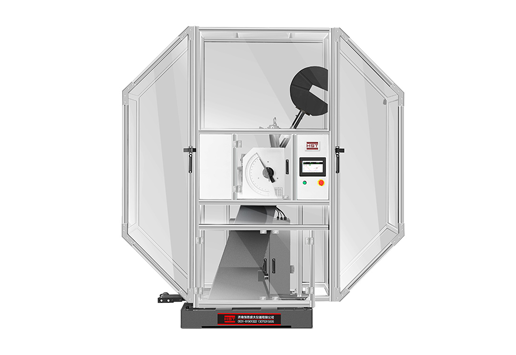
- The DWC-80T pairs with the pendulum side of the impact testing machine series - HST's automatic Charpy machines such as the HST JBW-300B strike the specimen; the DWC-80T brings the specimen to its test temperature before it reaches the striker. EN 10045 and GB/T 229-2009 appear on both sides of that line, which is the point: one standards set, two machines.
- Programmes that need temperatures below -80deg C, or a larger cooling volume than the 300 x 160 x 120mm tank, are the special-manufacture route - the product sheet states the cold room volume can be built to customer requirement.
- High-and-low temperature work on larger specimens (a whole test piece, not an impact bar) is a different class of equipment - the High And Low Temperature Test Chamber category - not an impact bath.
- If the lab only tests at room temperature, the chamber is not required at all; the DWC-80T earns its place the moment the protocol asks for a -20, -40 or -60deg C point.
Total cost of ownership
- Power is 3.2kW at 220V - one ordinary lab circuit, no three-phase requirement stated in the sheet.
- Consumables are the cooling medium (methanol or anhydrous ethanol, about 5L per fill) and the routine bath care that comes with any liquid-immersion system.
- The compressor route removes the recurring purchase of liquid nitrogen or dry ice from the operating budget - the medium is the solvent, not the cold.
- The 910 x 510 x 950mm frame on castors is a floor-standing unit that moves between the impact machine and the prep bench without rigging.
Standards and compliance
- ASTM E23-02a - metallic materials, notch impact testing
- EN 10045 - metallic materials, Charpy impact test
- ISO 880 - metallic materials, Charpy Pendulum Impact Test
- GB/T 229-2009 - metallic materials, Charpy impact test method
The product sheet also documents the machine line's CE attestation under the 2006/42/EC Machinery Directive (Annex VIII, UDEM, covering the HST testing-machine range including the DWC series) and ISO 9001 registration (GB/T 19001-2016/ISO 9001:2015, CTC, for the production and sales of testing machines).
Frequently Asked Questions (FAQ)
1. What is the temperature range of the HST DWC-80T?
+30 to -80deg C, with control accuracy of 0.2deg C and uniformity of 1deg C.
2. How many specimens does it cool at once?
72 standard impact specimens of 10 x 10 x 55mm in the 300 x 160 x 120mm cooling tank.
3. Does it need liquid nitrogen?
No. Cooling is compressor refrigeration (imported Europe Embraco compressor) in a methanol or anhydrous ethanol medium, about 5L.
4. How fast does it reach -80deg C?
The dropping speed steps down with depth: about 1.5deg C/min from +30 to 0, about 1.3deg C/min from 0 to -20, about 1.2deg C/min from -20 to -40, about 1.0deg C/min from -40 to -60, and about 0.8deg C/min from -60 to -80.
5. Can the chamber log the temperature for a test report?
Yes. The touch panel has a data report screen with time, date, PV and SV, plus a time-interval query for pulling the logged curve of a run.
6. What power supply does it need?
220V +/-10%, 50Hz, 3.2kW, in a working environment of 5 to 30deg C.
HST GROUP - Focus In Material Test. Kindly contact HST Group (Jinan Hensgrand Instrument Co., Ltd.) via WhatsApp at +86 15910081986, or by email at admin@hssdtest.com, www.hssdgroup.com.