



Abstract
The HST RLT6300 is a low-temperature brittleness tester for rubber and plastics. It cools its working chamber with an imported compressor across a control range of -70 deg C to 0 deg C, and measures the highest temperature at which vulcanized rubber is impacted to damage under special conditions - that temperature is called the brittle temperature. It also identifies the different usability between non-rigid plastics and other flexible materials under low-temperature conditions, and can compare the brittle temperature and low-temperature performance quality of different kinds of materials or different formula vulcanized rubber. It is used in scientific material and product quality inspection and in production process control, per GB/T 1682-2014, ISO 812-2006 and ASTM D2137-1994.
Key Takeaways
- Temperature control range from -70 deg C to 0 deg C; after constant temperature is reached, fluctuation stays below ±0.5 deg C within the first three minutes of the test.
- Imported compressor cools the bath in about 2 hours; the cooling medium is ethanol or other non-freezing liquids.
- Working chamber of 200 x 140 x 100 mm (length x height x width), matched to the single specimen method of GB/T 1682-2014.
- One tester covers vulcanized rubber in different materials or formulas, non-rigid plastics and other flexible materials; ASTM D2137-1994 extends the method to flexible polymer and coated fabric.
- Runs on 220 V to 240 V, 50 Hz at 2 KW, with a maximum overall dimension of 720 x 700 x 1380 mm (length x height x width).
What the HST RLT6300 is for
The tester is built around one measurement: the brittle temperature, the highest temperature at which vulcanized rubber is impacted to damage under special conditions. Around that value it carries three lab duties:
- Quality inspection of scientific materials and their products, where the brittle temperature is the recorded number against which lots are compared.
- Production process control, watching the low-temperature performance quality of the material while the process runs.
- Material and formula comparison, where different kinds of materials or different formula vulcanized rubber each get their brittle temperature on the same bath.
It also identifies the different usability between non-rigid plastic and other flexible materials under low-temperature conditions. As part of the rubber industry testing equipment line, it gives the lab's low-temperature station its brittleness value.
How a low-temperature brittleness run works
The run follows the documented sequence - cool, hold, impact, read the temperature:
- The working chamber is filled with ethanol or other non-freezing liquids, and the imported compressor pulls the bath down to the set temperature in about 2 hours.
- Once constant temperature is reached, the bath holds within ±0.5 deg C through the first three minutes of the test, so the impact happens at the temperature the record says it did.
- The specimen is impacted at the set temperature; the highest temperature at which the impact damages the vulcanized rubber is the brittle temperature reported by the run.
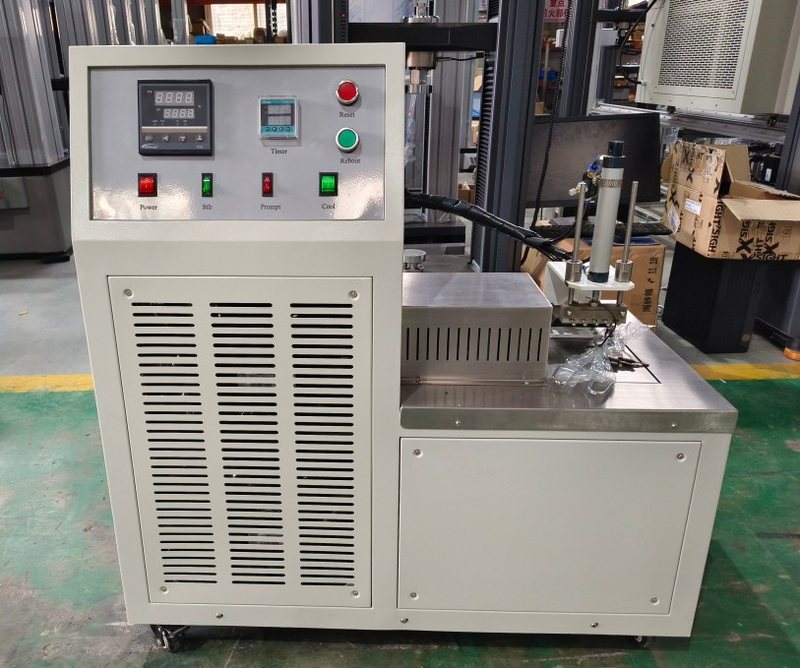
- The front panel keeps the run local: a digital temperature controller, a timer, and labeled operating buttons (Power, Hit, Protect, Chill), so the operator sets, holds and stops the run from the machine itself.
What the -70 deg C to 0 deg C range means for your lab
- The control range puts the full low-temperature service window of rubber and flexible plastics inside one bath, with no second unit needed for deeper cold.
- The single specimen working chamber matches the single specimen method of GB/T 1682-2014: one specimen per run, read against the bath temperature, and the next specimen starts the next value.
- Stability is what makes the brittle temperature meaningful: holding below ±0.5 deg C in the first three minutes pins the damage point of the impact to a bath temperature the record can stand behind.
- The specimen sits in direct contact with the cooled bath while the run is set and the impact is made, so the sample temperature follows the bath temperature at the moment of impact.
HST RLT6300 specifications
- Temperature control range: -70 to 0 deg C
- Cooling rate: about 2 hours, imported compressor for refrigeration
- Temperature fluctuation after constant temperature (for testing within three minutes): < ±0.5 deg C
- Working chamber dimension: 200 x 140 x 100 mm (length x height x width)
- Cooling medium: ethanol or other non-freezing liquids
- Maximum overall dimension: 720 x 700 x 1380 mm (length x height x width)
- Blender motor: 15 W
- Working power supply: 220 V to 240 V, 50 Hz, 2 KW
Selection guide: where the RLT6300 fits
- Your duty is low-temperature brittleness of vulcanized rubber - one specimen at a time, against GB/T 1682-2014, ISO 812-2006 or ASTM D2137-1994: the RLT6300 is built for that single specimen method.
- Your lot is not only rubber: non-rigid plastics and other flexible materials run in the same bath, and ASTM D2137-1994 extends the method to the brittle point of flexible polymer and coated fabric.
- You compare formulas rather than single lots: different formula vulcanized rubber, tested one after another on the same bath, gives the low-temperature performance quality side by side.
- In the HST catalog, the RLT6300 sits in the plastic pipes and rubber test machine family; labs that also run extended environmental programs can pair it with the High And Low Temperature Test Chamber.
Total cost of ownership
- The machine runs on a standard 220 V to 240 V, 50 Hz supply at a 2 KW rating, so it slots into an ordinary lab circuit.
- The bath medium is ethanol or another non-freezing liquid - a routine lab consumable rather than a specialty fluid.
- The blender motor draws 15 W, and the cooling duty falls on the imported compressor; the run time is dominated by the cool-down, not by the impact itself.
- At a maximum overall dimension of 720 x 700 x 1380 mm (length x height x width), the station takes a single compact bench position.
Standards and compliance
Test methods the machine conforms to, per the product sheet:
- GB/T 1682-2014 - vulcanized rubber, determination of low temperature brittleness (Single Specimen Method)
- ISO 812-2006 - rubber, vulcanized or thermoplastic, determination of low-temperature brittleness
- ASTM D2137-1994 - testing method for rubber properties, brittle point of flexible polymer and coated fabric
- The sheet lists no calibration or verification standards for this model, so none are restated here.
Frequently Asked Questions (FAQ)
1. What is the brittle temperature?
The highest temperature at which vulcanized rubber is impacted to damage under special conditions. That value is what the RLT6300 measures, and it is the recorded number for the material's low-temperature limit.
2. Which materials can the RLT6300 test?
Vulcanized rubber in different materials or formulas, non-rigid plastics, and other flexible materials; the ASTM D2137-1994 method also covers the brittle point of flexible polymer and coated fabric.
3. What is the cooling medium, and how long does the cool-down take?
Ethanol or other non-freezing liquids; the imported compressor brings the bath to the set temperature in about 2 hours, and the bath then holds below ±0.5 deg C fluctuation through the first three minutes of the test.
4. How big is the working chamber?
200 x 140 x 100 mm (length x height x width), sized for the single specimen method.
HST GROUP – Focus on Material Test. Kindly contact HST Group via WhatsApp at +86 15910081986.