



Abstract
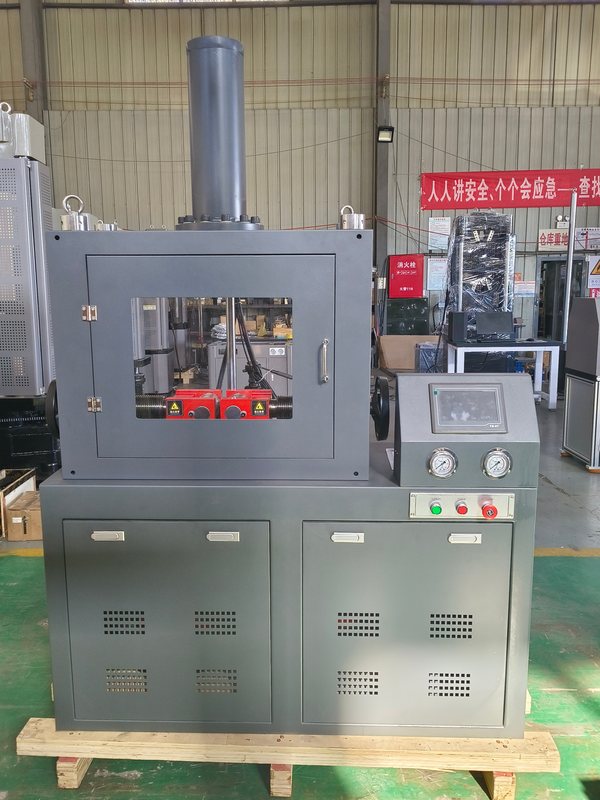
The HST-BT160 is a digital display forward and reverse Bending Testing Machine for metallic materials: bars, plates and rebar for construction. Driven by a hydraulic power source, it carries a maximum test force of 160 kN and is built from four parts - test host, oil source, standard bending indenters and a reverse bending device. The machine is loaded by a bidirectional hydraulic cylinder, the bending angle runs from 0 to 180 deg with the angle settable, and the distance between the support rollers is adjusted by handwheel with self-locking. It conforms to GB/T 232-2010, GB 1499.1-2008 and GB 1499.2-2018.
Key Takeaways
- Maximum thrust 160 kN, working stroke 300 mm, maximum working pressure 25 MPa, cylinder loading speed about 120 mm/min.
- Bending angle range 0 to 180 deg, angle can be set; bending circle sample diameter 6 to 32 mm across the two indenter grades.
- Standard configuration: 14 indenters (diameters 30 mm to 216 mm, including one reverse bending 20 deg indenter) and 3 pressure head seats covering 30-50, 60-110 and 125-216 mm.
- Maximum distance between support rollers 320 mm.
- Machine power 1.1 kW on a 380 V supply; host about 1200 kg, 1350 x 550 x 2000 mm.
What the HST-BT160 is for
The machine is used for the bending test of metallic materials such as bars, plates and rebar for construction. Two duties sit in one test station:
- Forward bending: the bar is bent over the standard indenter to the set angle under the hydraulic load, per the bending test method of GB/T 232-2010.
- Reverse bending: the reverse bending device and its 20 deg indenter run the reverse bending duty on the same host.
For construction rebar, the machine serves both product standards listed in the sheet - hot rolled round bar per GB 1499.1-2008 and hot rolled ribbed steel bar per GB 1499.2-2018. In the HST catalog, it sits on the Steel Bar Bending Testing Machine page.
How the bidirectional hydraulic cylinder drives the bend
- The loading path is a bidirectional hydraulic cylinder, so the same cylinder does the pressing work in both directions of the bend.
- The oil source (hydraulic power source) feeds the cylinder, with the cylinder loading speed at about 120 mm/min.
- The digital display on the front console shows the test state while the run is set and the bar is bent; the console also carries the pressure gauges and the start and stop controls.
- The distance between the support rollers is adjusted by the handwheel and can be self-locking, so the span holds the position set for the bar while the load is applied.
The indenter set that covers 6 to 32 mm samples
- 14 indenters come standard, with diameters from 30 mm to 216 mm (30, 40, 50, 60, 70, 80, 90, 100, 110, 125, 168, 192 and 216 mm), including one indenter for reverse bending at 20 deg.
- The 3 pressure head seats are divided into 30-50 mm, 60-110 mm and 125-216 mm, so the indenter range is organized in three seat groups.
- The bending circle sample diameter runs 6 to 32 mm in two indenter grades - 400/400E and 500/500E/600; the indenter diameter required for the 500/500E/600 grade is ordered and purchased separately.
- Indenter diameters beyond the standard set can also be ordered separately.
HST-BT160 specifications
- Model: HST-BT160
- Maximum thrust: 160 kN
- Working stroke: 300 mm
- Maximum working pressure: 25 MPa
- Bending angle range: 0 to 180 deg (angle can be set)
- Bending circle sample diameter: 6 to 32 mm, indenter grades 400/400E and 500/500E/600 (the 500/500E/600 grade indenter is ordered separately)
- Reverse bending indenter diameters: 30, 40, 50, 60, 70, 80, 90, 100, 110, 125, 168, 192 and 216 mm (other specifications ordered separately)
- Maximum distance between support rollers: 320 mm
- Cylinder loading speed: about 120 mm/min
- Dimensions of the host: 1350 x 550 x 2000 mm
- Machine power: 1.1 kW
- Power: 380 V
- Host weight: about 1200 kg
- Standard configuration: main host 1 set, indenters 14 (including 1 reverse bending 20 deg), pressure head seats 3, reverse bending device 1 set
Selection guide: where the HST-BT160 fits
- Your program is the bending test of bars, plates and construction rebar to GB/T 232-2010, with sample diameters inside the standard range: the HST-BT160 is built for exactly that duty.
- You test round bar (GB 1499.1-2008) and ribbed bar (GB 1499.2-2018) on the same station: the indenter set and the two bending circle grades carry both product lines.
- Reverse bending is part of your acceptance routine: the reverse bending device and its dedicated indenter are standard, not an add-on.
- If the routine also includes wire reverse bending duty, the Wire Reverse Bending Testing Machine is the neighboring station in the HST bending family.
Total cost of ownership
- Machine power is 1.1 kW on a 380 V supply, a modest draw for a hydraulic bending station.
- The host weighs about 1200 kg within 1350 x 550 x 2000 mm, so the station plans as a normal floor-mounted hydraulic tester.
- The standard indenter set covers the full 14-indenter range out of the box; extra indenter diameters are ordered only when the program needs them.
- The handwheel span adjustment keeps setup between bar diameters manual and tool-free.
Standards and compliance
Per the product sheet:
- GB/T 232-2010 - bending test method for metallic materials (the method standard for the run)
- GB 1499.1-2008 - steel for reinforced concrete Part 1: hot rolled round bar
- GB 1499.2-2018 - steel for reinforced concrete Part 2: hot rolled ribbed steel bar
- The sheet lists no calibration or accuracy class for this model, so none are restated here.
Frequently Asked Questions (FAQ)
1. What does the HST-BT160 test?
The bending test of metallic materials such as bars, plates and rebar for construction - forward bending and reverse bending on the same hydraulic station.
2. Which sample diameters can it bend?
The bending circle sample diameter runs 6 to 32 mm across the 400/400E and 500/500E/600 indenter grades; the indenter diameters run 30 mm to 216 mm.
3. How is the bending angle controlled?
The bending angle range is 0 to 180 deg and the angle can be set; the bidirectional hydraulic cylinder applies the load.
4. What is in the standard configuration?
Main host 1 set, 14 indenters (including one reverse bending 20 deg indenter), 3 pressure head seats, and the reverse bending device 1 set.
HST GROUP – Focus on Material Test. Kindly contact HST Group via WhatsApp at +86 15910081986.