



Abstract
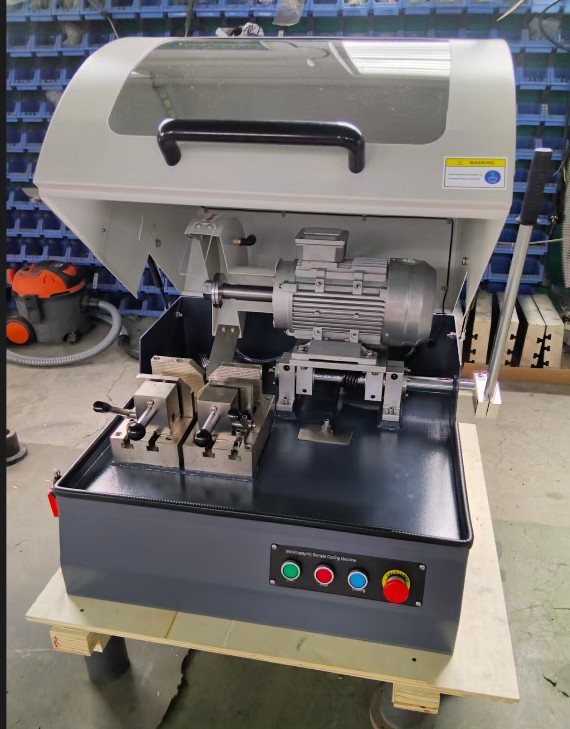
The HST-SQ60 is a benchtop, manual Metallographic Cutting Machine with a 60mm maximum cutting diameter, a 2800rpm spindle and a 2.2kW drive, built to section metal and non-metal samples for Metallographic and petrographic examination. With an enclosed, windowed cutting cover, an independent water tank with pump and a standard 30-32mm vise in the box, it is the entry station of a sample-preparation programme - the first step before mounting, grinding and polishing. This 2026 buyer's note walks through what the SQ60 is for, how the cut is set up, what to verify before ordering, and where the model sits against HST's larger and automatic cutters.
Key Takeaways
- 60mm maximum cutting diameter on a 2800rpm spindle with a 250x2x32mm thin-reinforced grinding wheel
- Manual feed inside an enclosed, windowed cover - a compact 710x645x470mm benchtop footprint
- Built-in cooling system with an independent water tank and pump, plus inlet/outlet piping and clamps
- Standard 30-32mm vise included; a quick clamp is available as an option
- Three-phase 380V/50Hz supply, 2.2kW cutting power; 86kg net weight on a single 102kg crate
- First step of the preparation chain: cut here, then on to a Metallographic Mounting Machine and a Metallographic Grinding and Polishing Machine
What the HST-SQ60 is for
The HST-SQ60 is a manual metallographic sample cutting machine for cutting samples of various metal and non-metal materials, in order to observe the metallographic and petrographic structures of the material. That is the sectioning step of the classic preparation chain: a bar, plate, casting, core or weld specimen is cut to the right geometry, then mounted, ground and polished before microscopy or analysis.
The machine is aimed at the round-sample work that fills most materials labs - wire, rod, tube and bar up to 60mm diameter - where a manual benchtop cutter does the job at a fraction of the footprint of a full-size station. The high-speed rotating thin-reinforced grinding wheel keeps the cut face clean and the cycle time short, and the enclosed cover keeps coolant where it belongs - on the wheel, not on the operator or the bench.
Why the sectioning step sets the ceiling for the whole chain
A metallographic examination is only as good as the face it starts from. Cutting is the step that removes the bulk of the material between the raw sample and the mounted section, so the two things to protect are heat control and geometry control.
Heat control is why the SQ60 carries a dedicated cooling system that takes away the heat generated during cutting. The coolant is delivered from an independent water tank with its own pump, fed to the cutting zone through the supplied inlet pipe and drained through the outlet pipe - a self-contained loop that keeps the wheel at working temperature through a full batch of cuts.
Geometry control is why the feed is manual: the operator watches the cut line through the window and drives the workpiece in at a pace matched to the material, which is exactly what a manual sectioning station is for. Once the cut face is clean and square, everything downstream - mounting, grinding, polishing and the first Microscope image - starts from a good foundation.
How a cut is set up and run
Clamp the sample
The standard 30-32mm vise ships with the machine and holds the workpiece on the cutting line. A quick clamp is available as an option for shops that move through samples faster and want to cut re-clamping time between pieces. The 60mm maximum cutting diameter is the largest round bar the wheel opening clears, so round stock up to that size fits the standard vise.
Fill the tank and run the wheel
The water tank (470x370x300mm, 15kg net) is a separate unit with the pump included, connected by the inlet pipe, outlet pipe and the two pipe clamps from the packing list. With the cover closed, the 2800rpm spindle drives the 250x2x32mm thin-reinforced grinding wheel, and the two cutting discs in the box cover a full start-up run before the first spare is needed.
Drive the cut
The operator feeds the sample by hand against the rotating wheel while the coolant runs, stopping when the cut is complete. The enclosed cover and the window in the lid keep the view of the cut line clear and contain the spray, and the manual control panel on the base - start, stop and the emergency stop - keeps the whole sequence one-person operation.
Reading the result
The check after each cut is the cut face itself. With the cooling system running and a fresh 250mm wheel, the face coming out of the SQ60 should be even, without chatter lines, and free of the heat tint that marks an overheated section. Where a section still shows heat influence, the usual levers are the two the machine already provides: keep the coolant flow onto the wheel, and slow the manual feed for the harder alloys. The thin-reinforced wheel design is the third lever - its 2mm profile takes less material per pass, which keeps the thermal load down for sensitive alloys and heat-treated stock.
Specifications
Cutting
- Model: HST-SQ60 (manual metallographic sample cutting machine)
- Maximum cutting diameter: 60mm
- Grinding wheel: 250 x 2 x 32mm thin-reinforced, 2 discs supplied
- Spindle speed: 2800 r/min
- Cooling: built-in cooling system with independent water tank and pump
Drive and electrical
- Cutting power: 2.2kW
- Input voltage: three-phase 380V, 50Hz
Structure and logistics
- Enclosed cover with observation window and handle
- Machine dimensions: 710 x 645 x 470mm
- Packing size: 730 x 760 x 620mm
- Net weight: 86kg; gross weight: 102kg (single crate)
- Water tank: 470 x 370 x 300mm, 15kg net / 25kg gross, tank packing 540 x 460 x 480mm
Selection guide: where the HST-SQ60 sits
The SQ60 is the manual, round-sample station at the 60mm class. Three boundary cases point elsewhere in the HST range:
- Samples larger than 60mm diameter, or squared stock that needs a bigger opening - step up to the HST-LDQ130Z 130mm large-sample cutter, which runs a 130mm maximum passing diameter with three automatic feed modes.
- High-volume, repeatable sectioning where the same cut is repeated hundreds of times - the automatic cutters of the Q100 series run the cut under automatic control, which is where cycle time and repeatability start to pay back the extra cost.
- The power requirement: the SQ60 is a three-phase 380V/50Hz, 2.2kW machine, so the installation point should be checked against the lab's supply before the cabinet is laid out.
For a lab whose workload is daily round-section cuts up to 60mm - wire, rod, tube, bar and core samples for metallurgy or petrography - the manual SQ60 is the leanest station that still gives enclosed, cooled, window-viewed cutting.
Total cost of ownership
- Running costs concentrate on consumables: grinding discs (2 supplied) and coolant; HST lists a full metallographic consumables range covering cutting discs, coolant and the rest of the preparation chain.
- The water tank, pump, piping and clamps are all included, so the cooling loop needs no external plumbing at set-up.
- The 86kg net weight fits a single crate (102kg gross, 730x760x620mm), which keeps freight and two-person installation straightforward for a benchtop class machine.
Standard configuration and documentation
In the box
- Manual sample cutting machine HST-SQ60, 1 set
- Standard vise (30-32mm), 1 set
- Cutting discs 250mm, 2 pcs
- Water tank with water pump, 1 set
- Water inlet pipe, 1 pc; water outlet pipe, 1 pc; pipe clamps, 2 pcs
- Wrench 30-32mm, 1 pc; wrench 36mm, 1 pc
- Product manual, product certification and packing list, 1 sheet each
Optional
- Quick clamp, 1 set
Frequently Asked Questions (FAQ)
1. What materials can the HST-SQ60 cut?
Various metal and non-metal materials - the machine is designed for sectioning samples that will be examined for their metallographic and petrographic structures, so it covers the usual alloy, wire, rod, tube, composite and rock-core work of a materials lab.
2. Does it include the cooling system?
Yes. The cooling system comes with the machine, and the independent water tank with its pump, the inlet and outlet pipes and the pipe clamps are all in the packing list.
3. What is the maximum sample size?
The maximum cutting diameter is 60mm, on a 250x2x32mm thin-reinforced grinding wheel running at 2800rpm.
4. What power supply does it need?
Three-phase 380V at 50Hz, 2.2kW cutting power. Check the lab installation point against this before the cabinet layout is finalized.
5. Which clamps come with the machine?
The standard 30-32mm vise is included. A quick clamp is available as an option for faster sample changes.
6. What happens after the cut?
The next steps in the chain are mounting on a metallographic mounting machine and finishing on a metallographic grinding and polishing machine - both part of the same HST metallographic equipment range, so the whole preparation line can come from one supplier.
HST GROUP - Focus in Material Test. Kindly contact HST Group (Jinan Hensgrand Instrument Co., Ltd.) via WhatsApp at +86 15910081986, or by email at admin@hssdtest.com, www.hssdgroup.com.