

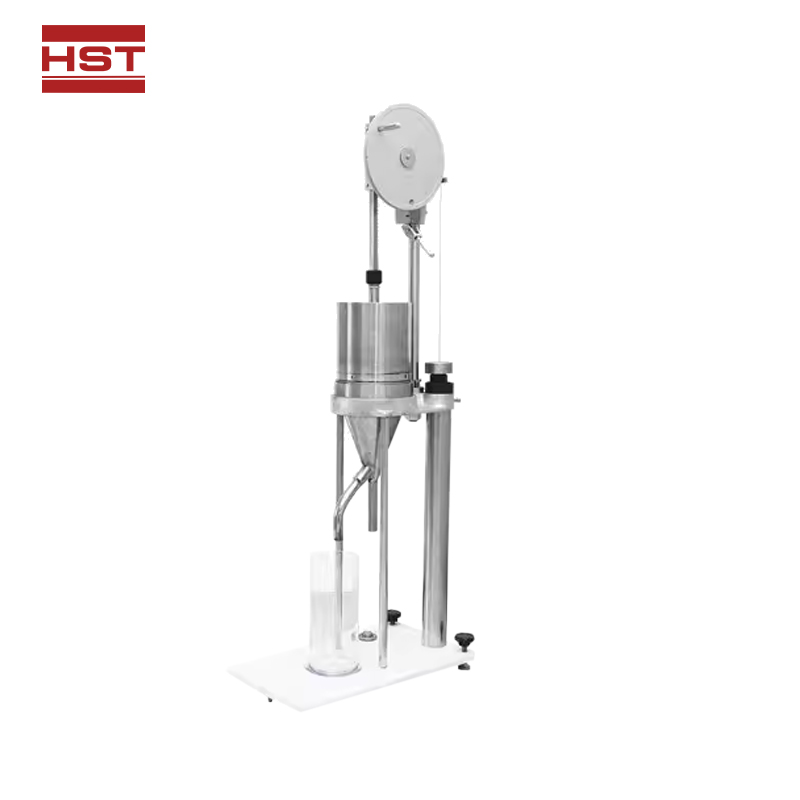
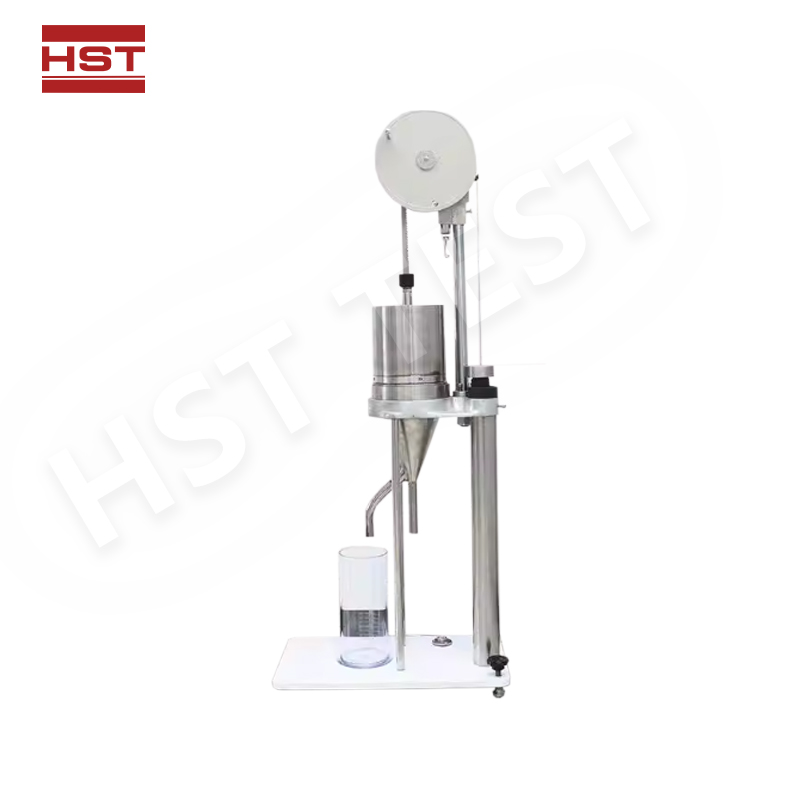

HST-DJD100 Beating Freeness Tester
Introduction
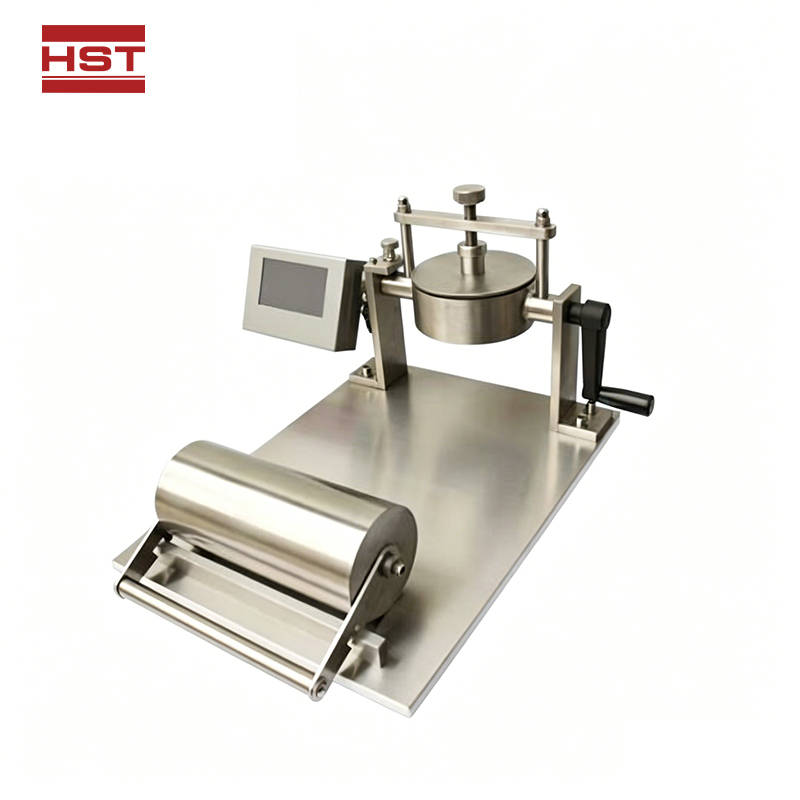
The beating degree tester (also known as the beating degree tester) is designed based on the phenomenon that the beating degree of pulp is inversely proportional to the filtration rate of the pulp suspension. It is modeled after the Schubert-Riegeler beating degree tester and is used to determine the filtration performance of pulp suspension, study fiber condition, and evaluate the degree of pulp beating.
Features:
1. The beating degree tester uses a manually tightened sealing cone.
2. A three-legged leveling mechanism adjusts the centering of the sealing cone to ensure a tight seal between the cone and the cylinder.
3. A throttle valve regulates the water flow rate, thereby adjusting the piston rod's rising speed and ultimately the sealing cone's rising speed.
4. Key components of the instrument are made of high-quality corrosion-resistant stainless steel, resulting in a more aesthetically pleasing, rust-free, and durable machine.
Specification
|
Model |
HST-DJD100 |
|
Measurement range |
1~100 SR |
|
Indicator cylinder graduation value |
1 SR |
|
Overflow outlet drainage time |
149±1s |
|
Remaining volume |
7.5~8mL |
|
The rising speed of the sealing cone |
100±10mm/s |
|
Test conditions |
Temperature 10–30℃, relative humidity not exceeding 85% |
|
Main unit size |
450×250×1160mm |
|
Net weight |
About 30 kg |
|
Standard |
ISO 5267/1 "Pulp—Determination of water permeability—Part 1: Schubert-Riegeler method" GB 3332 "Determination of freeness of pulp" etc. |
|
Standard configuration |
Main unit 1 + Copper mesh 2 + Rubber ring 2 + Measuring cylinder 2 + Wrench 1 + Technical documents |
Relate Products